 Reserve Your Spot
 (888) 845-5781
 Destinations
 Taking A Trip
 About Us


 Home
 Reserve a Guided Trip
 Reserve a Self-Guided Trip
 Destinations
 Taking a Trip
- Trips Overview
- Trips Preparation
- Trips Overview
 About Us
 Contact Us
 Blog
 (888) 845-5781
Literary England on Foot: 2027 Walking Trips
Uncategorized | 15 hours ago
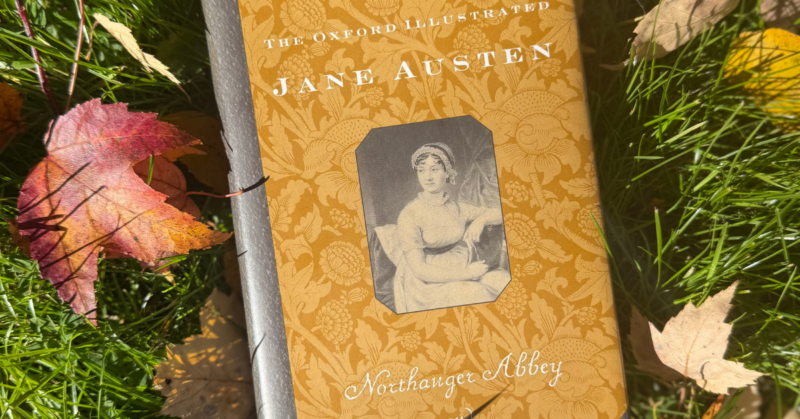
Explore the moors, hills, and lakes behind “Dracula”, “All Creatures Great and Small”, and Wordsworth’s poetry on our 2027 England walking trips.
The rolling meadows, misty moors, and abandoned abbeys of England have served as both home and inspiration for some of literature’s greatest names, its bucolic beauty and centuries of history having long drawn artists, poets and writers to its hills. Each of these walking trips follows a long distance trail through the English countryside, past picturesque villages and the landscapes behind some very famous books. Join us on any one of our 2027 England hiking trips and walk the footpaths of your favorite novels.
England Coast-to-Coast (May 3 to 17, 2027)
Our Coast-to-Coast walk begins in Whitby, where the River Esk meets the North Sea beneath the ruins of a clifftop abbey. In the summer of 1890, Bram Stoker stayed here, and in the town’s library he came across the name Dracula while reading about Wallachia and a fifteenth-century prince. The cliffs, the abbey, and the harbor became the backdrop for one of literature’s most spine-tingling tales. In Stoker’s 1897 novel, a ship runs aground below the East Cliff, and a large dog leaps ashore and bounds up the 199 steps to St Mary’s churchyard. You can climb the same steps today.
From Whitby we turn west, and the route follows the Eskdale Way, an old monks’ path between Whitby Abbey and the chapel at Grosmont, onto the North York Moors. From there the walking trails carry on through the Yorkshire Dales before climbing into the Lake District, crossing three national parks in all. We follow much of the long distance trail outlined in Alfred Wainwright’s 1973 guidebook, A Coast-to-Coast Walk, though we move east to west, saving the Lake District for last, and add a few variations of our own. Wainwright wrote that “The fleeting hour of life of those who love the hills is quickly spent, but the hills are eternal. Always there will be the lonely ridge, the dancing beck, the silent forest; always there will be the exhilaration of the summits.” Thoughts of time and life are well suited to long days on open moors, and if you’ve ever felt the urge to shout “Heathcliff” across vast, windswept heather, these hills will oblige, though Emily Brontë’s own moors lie to the south, around Haworth.
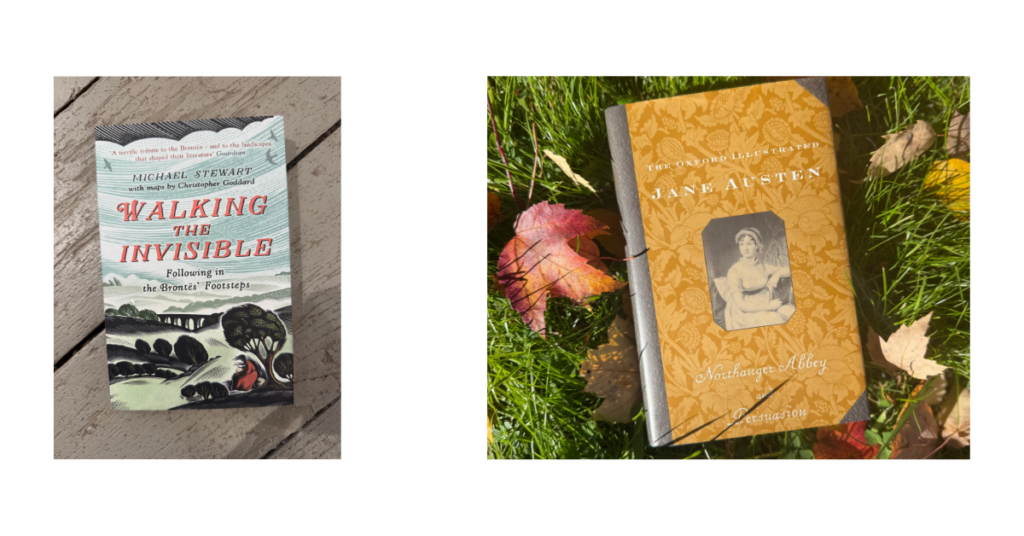
The James Herriot Way (August 11 to 18, 2027)
In 1940, a young Glasgow-trained vet named Alf Wight joined a practice in Thirsk, in North Yorkshire. For decades he crossed the Dales in all weathers to reach farms, treat sick and injured animals, deliver calves in the middle of the night, and warm himself at farmhouse kitchen tables. In the early 1950s, he took his son on a circular ramble through Swaledale and Wensleydale, staying in youth hostels. Writing as James Herriot, he later turned his years in the Dales into stories: his first book appeared in 1970, and by 1972 an omnibus edition titled All Creatures Great and Small had begun to sell in the millions. The 52-mile James Herriot Way follows that spirit, looping through the Yorkshire Dales past drystone walls, field barns, and the picturesque villages that fill the pages of his books.
The Cotswold Way (June 1 to 11, 2027)
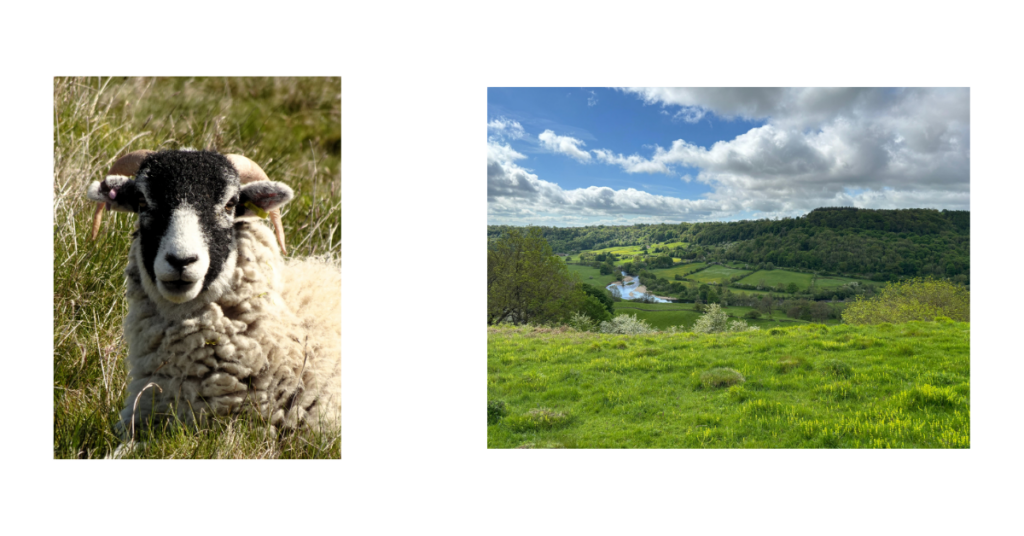
The Cotswold Way follows the western rim of the Cotswold Hills for 102 miles, from the market town of Chipping Campden to the Roman city of Bath. Conceived as a long-distance route in the 1950s, waymarked by the mid-1970s, and designated a National Trail in 2007, it passes through rolling pastures, shady beech woods, and honey-colored villages built from Cotswold stone, with a welcoming pub or comfortable inn never far away. Each day climbs up to and along the escarpment, where the views open across the Vale of Evesham and the Severn Vale.
This is the countryside that drew T.S. Eliot, who, in the summer of 1934, was walking near Chipping Campden when he came upon an old manor house called Burnt Norton and its gardens. They inspired the poem of the same name that opens Four Quartets (1936), with its reflections on time and the “still point of the turning world.” The house is privately owned and near our route but the countryside that drew Eliot is the same.
Farther along, the route passes by the Stanway Estate, with its medieval tithe barn and Jacobean manor house, a favorite of J.M. Barrie (Peter Pan) in the 1920s. J.R.R. Tolkien and Lewis Carroll both visited the area often, finding inspiration in its old stone streets and quiet, rolling hills. Our Cotswold Way trip ends in Bath, where a carved stone disc in the pavement marks the finish, close to the Roman Baths and Bath Abbey. The city has a long literary list of its own. Jane Austen lived here from 1801 to 1806 and set parts of Northanger Abbey and Persuasion in its streets, while Mary Shelley lived at 5 Abbey Churchyard in 1816 and 1817 and wrote much of Frankenstein during her time in the city. Charles Dickens was also a frequent visitor and satirized Bath society in his first novel, The Pickwick Papers.
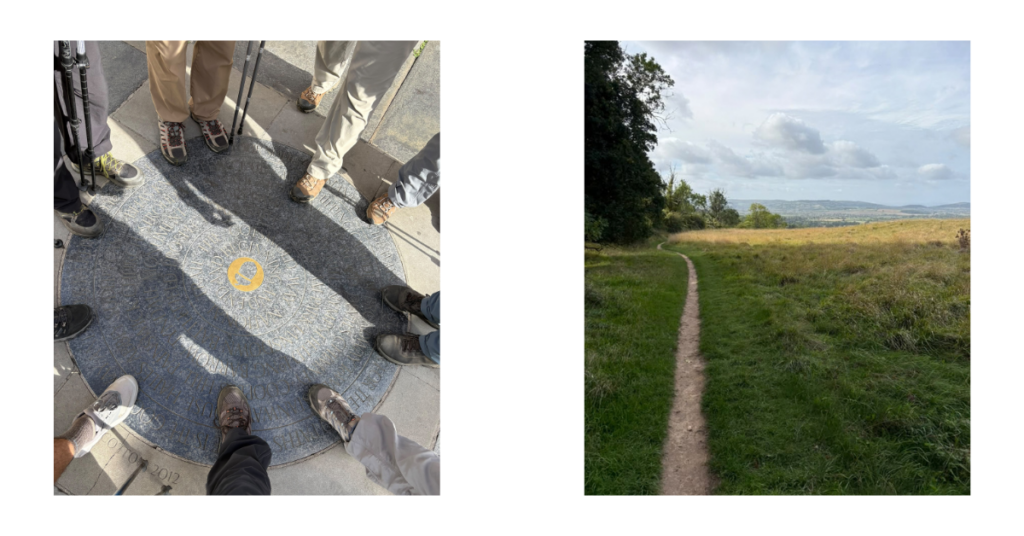
Lake District Rambles (September 1 to 9, 2027)
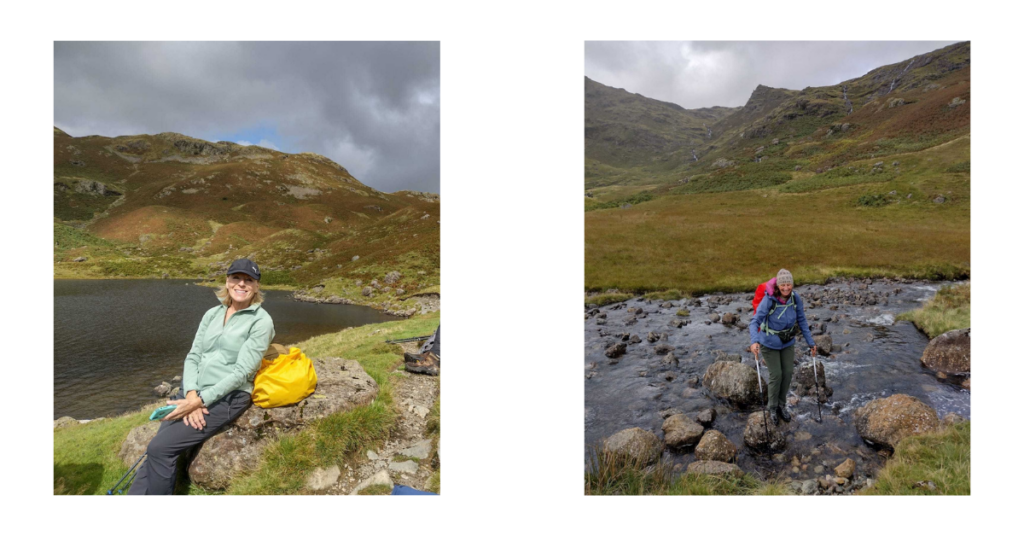
The Lake District has perhaps one of the richest literary landscapes in England, and it’s the world of William Wordsworth. He composed while walking the fells and tarns around his Grasmere home, often with his sister Dorothy at his side, turning the district’s beauty into verse that has outlasted him. Between 1799 and 1808, he lived in Grasmere, a village beside a small lake ringed by high fells, and a visit to Dove Cottage and the Wordsworth Museum is part of this itinerary. Wordsworth is buried in the churchyard of St Oswald’s, a short walk away. Wordsworth was an inspiration to fellow poets who often traveled to the area to visit him and stay awhile. Known as the Lake Poets, their work helped found the English Romantic movement, which among other key themes explored the sublime in the natural world, viewing nature as a living, moral force rather than a scenic backdrop. In Keswick, part of the Lake District National Park, Greta Hall was once home to Samuel Taylor Coleridge, who lived there from 1800 to 1803 and often visited Wordsworth at his home in Grasmere. Robert Southey, Coleridge’s brother in law and a famous poet in his own right, visited him in 1803 and took over the tenancy of Greta Hall when Coleridge moved on. Keats and Percy Shelley also spent time here, although much less, drawn by the beauty and mystery of the landscape.
As we continue on we enter Derwentwater, near Keswick in Cumbria. Sometimes called the “Queen of the Lakes,” this is where Beatrix Potter’s family summered between 1885 and 1907. Her sketches of the woods and shoreline became the setting for The Tale of Squirrel Nutkin, while the nearby Newlands Valley is the backdrop for The Tale of Mrs. Tiggy-Winkle. Potter later used the profits from her books to buy Hill Top, a farm near Hawkshead, and at her death she left around 4,000 acres to the National Trust, helping protect the countryside walkers still enjoy.
Walking These Routes
The England Coast-to-Coast and the James Herriot Way are inn-to-inn walking holidays, so you walk from one village to the next and sleep somewhere different most nights. Lodging includes country inns, small family-run hotels, and B&Bs, picked for where they sit along the route and for the welcome you get at the end of a long day. On both routes, luggage transfer is arranged day by day, so your bag travels ahead by road while you carry a daypack.
Those two also run as a self-guided walking tour. On a guided departure you walk with a small group and a leader who knows the ground. On a self-guided walk you keep your own pace, deciding when to start and how long to sit over lunch. We send topographic trail maps and detailed trail notes, book the beds, and arrange the luggage transfer.
The Cotswold Way and the Lake District Rambles run as guided trips only, on the dates listed above.
England’s literary history is long and layered, with the landscape woven into the background of so many great works. The paths you cross today are the ones that shaped them, and by moving through these landscapes slowly and with intention, we come to understand them in new ways. The light on a fell, a gate in a drystone wall, the sound of a beck, and the slope of a lane take on new meaning when we pause to notice them. If one of these landscapes has been calling to you, perhaps it’s time to pick up a good book and give us a call about our 2027 departures.
FAQ
Can I walk these routes at my own pace?
On the England Coast-to-Coast and the James Herriot Way, yes. Both run as a self-guided walking tour, with trail maps, trail notes, and your lodging booked ahead, so you set the daily rhythm yourself. The Cotswold Way and The Lake District Rambles are guided only.
How far do we walk each day?
It depends on the route. The England Coast-to-Coast crosses the United Kingdom from the North Sea to the Irish Sea over two weeks, while the James Herriot Way loops a shorter circuit through the Yorkshire Dales. Daily hiking times and elevation appear on each trip page, and our hiking grades explain what to expect.
Where do we stay along the way?
Country inns, small hotels, and B&Bs in the villages the walking trails pass through, with private rooms wherever the building allows. Many have a restaurant or bar of their own, which is usually where the day ends.
Do these trips run every year?
We offer more than 8 hiking and walking tours in England, although not all run each year. You can see our full list of trips on our England page. If a route you want is not running, get in touch and we will tell you when it comes back around or we can discuss a custom trip or similar itineraries.


