 Reserve Your Spot
 (888) 845-5781
  Destinations
 Taking A Trip
 About Us

 Home
Home Reserve a Guided Trip
 Reserve a Self-Guided Trip
 Destinations
 Taking a Trip
- Trips Overview
- Trips Preparation
- Trips Overview
 About Us
 Contact Us
 Blog
Blog (888) 845-5781
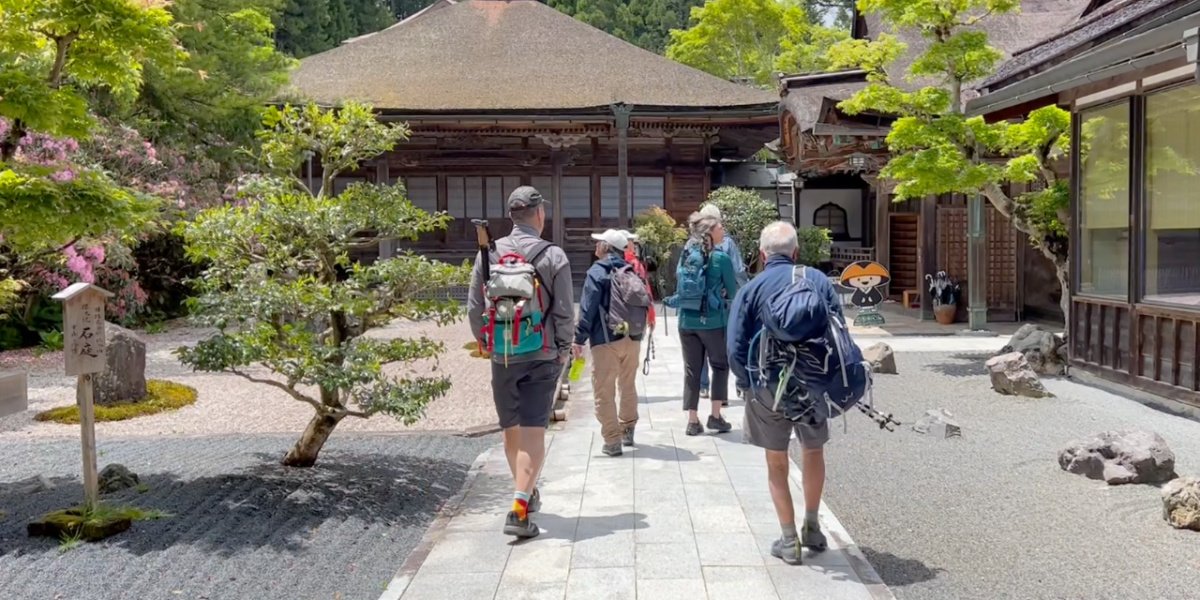
Hiking the Kumano Kodo
Highlights of the Imperial Pilgrimage Routes of Japan
Jump to:
Trip Summary
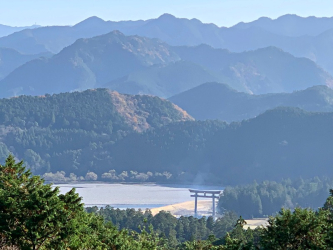
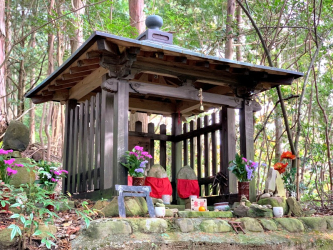
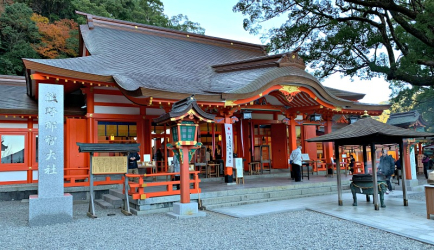
Extending out into the Pacific Ocean just south of Osaka and Kyoto, the southern mountainous region of the Kii Peninsula was once referred to as Kumano and regarded as a mystical “holy ground where gods dwell.” A region of spiritual and cultural significance, it was here at Gotobiki Rock that the three “spirits of nature”, or kami, were thought to have alighted from heaven to reside on earth. And, it was here that Jimmu, the first Emperor of Japan and descendent of Amaterasu the sun goddess, is thought to have been guided through the mountains by the mythical three-legged crow of the Kumano on his quest to unite the country.
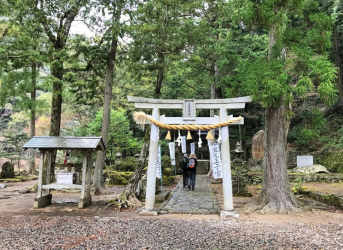
Over the centuries, the three Grand Shires of Hongu-Taisha, Hayatama-Taisha, and Nachi-Taisha were constructed to honor each of the kami and the Kumano faith evolved as an embracing of both a Shinto reverence for the sacred in nature and the arrival of Buddhist teaching. Imperial pilgrimages to the three grand shires, known collectively as the Kumano Sanzan, began in the 11th century. Starting in the ancient city of Kyoto, these journeys would often take 30 – 40 days and require an entourage of up to 800 people.
While the popularity and accessibly of these pilgrimage routes have ebbed and flowed throughout the ages, today the Kumano Kodo (Kodo meaning “old ways”) is recognized as one of only two UNESCO World Heritage-listed pilgrimage routes.
During this 14-day journey, beginning in Osaka and ending in Kyoto, we’ll experience the historical, cultural, and spiritual significance of the Kii Peninsula as we follow the old imperial ways to the sacred sites of the Kumano region.
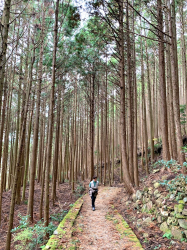
From Osaka, we’ll travel south to Mount Koya, the home of the Shingon (Pure Word) Sect of Esoteric Buddhism. After spending the night in one of the 117 temples in the area, we head south deeper into the Kii Mountains where we’ll hike the Nakahechi, one of the Kumano Kodo routes to the Three Grand Shrines. After visiting the village of Yoshino home to the Kimpusenji Temple, we’ll head out of the mountains to the ancient capital city of Nara, stopping en route to hike along historic Yamanobe-no-Michi. Our journey will end with a day spent in the cosmopolitan and truly fascinating city of Kyoto.
Along the way, we’ll immerse of selves in the Japanese way of travel, staying in old-world traditional Japanese inns called ryokan, bathing in hot spring onsens, and perfecting our chopstick skills as we enjoy classic Japanese cuisine. Join us for an unforgettable journey through this remote and mystical corner of Japan!
Hiking the Kumano Kodo Itinerary
Additional Information
SOLO TRAVELERS
Single Occupancy: If you are a solo traveler and wish to have your own room, a single supplement fee will apply starting at $950.
Single occupancy rooms are very limited for this trip. The single supplement of $950 applies to Days 1, 6, 10, 11, 12, and 13 (6 nights). The temple, as well as the smaller hotels and traditional Japanese inns where we stay along our route are not always able to accommodate single room requests. For those interested in single occupancy rooms, we will do our best to secure them for as many nights as possible and additional fees may apply.
If you are traveling alone and would like to share a room, we will match you with a roommate. If there is no one with whom you can share, a “forced single” fee of $750 will apply.
INCLUDED
- All accommodations
- All meals
- All group transfers from start to end of the tour as described in the itinerary, by private vehicle or train
- Luggage transfers
- Guides
- Entries and activities as specified in the itinerary
- Great hiking and happy memories!
NOT INCLUDED
Airfare, optional/individual transfers or excursions, items not on set dinner menu, beverages, insurance, tips to guides/leaders, items of personal nature (phone calls, laundry, excess baggage charge, passport fees, etc.).
LUGGAGE
The trip is vehicle-supported. This means most days you will need only carry a daypack with those items you will need during the day’s hike. Each day, our luggage will be transported ahead to our night’s accommodation, with the exception of Day 2 when we will be staying at a Shukubo temple. We suggest a 30-liter pack or one large enough for those additional items you will need for our night at the temple. We ask that each participant bring one medium size piece of luggage, preferably with wheels. Japanese inns tend to have narrow corridors and steps rather than elevators, so bear this in mind.
ACCOMMODATIONS AND FACILITIES
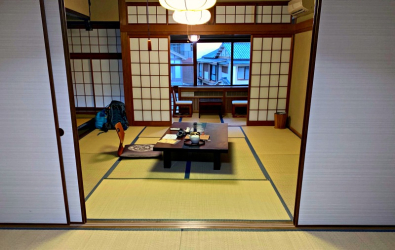
We will be staying at a range of accommodations during this trip, including hotels, temples, and ryokans. Some of our accommodations may be western-style while others will be more traditional Japanese inns called ryokans. When possible, we will “go Japanese” staying in Japanese-style rooms. These rooms are usually spacious and double occupancy with woven tatami mat floors, low tables, and futon beds with warm comforters.
Most accommodations will be “ensuite” with shower/bath and toilet facilities in the room; others will have shared facilities on the floor. Some ryokan may have baths or showers in the room, but most will have an onsen or o-furo (Japanese-style bath). Most accommodations will provide yukata, simple cotton robes, used for wear to the onsen, and meals. Meals at the ryokans may be served at low tables with seating on pillows on the floor. Slippers are generally provided at the entrance of the accommodation for use everywhere, except for in tatami rooms. You might like to bring your own (probably more comfortable!) slippers.
Rooms are double/twin occupancy unless a single is requested. Single rooms cannot always be guaranteed in temples and ryokan, but we will endeavor to secure these where possible.
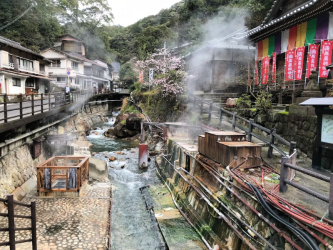
Japanese Baths: Japanese baths (o-furo) and natural hot springs (onsen) offer a unique and wonderful cultural experience if sometimes a challenge for the unprepared!
A centuries’ old tradition, there is a three-step process to taking a Japanese bath. Communal baths and onsen will are segregated by men’s and women’s. Each has a changing room. Showers are alongside the bath or hot spring. All clothing and belongings are left in individual baskets or lockers in the changing room. Showering with soap and thoroughly rinsing is done before entering the bath “au naturel” to relax. Bathing suits are not allowed in the baths. Some ryokans and hotels will have private baths for couples, families, or whomever.
Traditionally, tattoos have been prohibited in onsens due to their association with Japanese organized crime. Most onsens continue to strictly enforce this, though some have loosened their policies due the increase in foreign tourist. Some hotels or onsens allow adhesive coverings over small tattoos, others recommend bathing at time when the baths are least busy. Private baths are also an option.
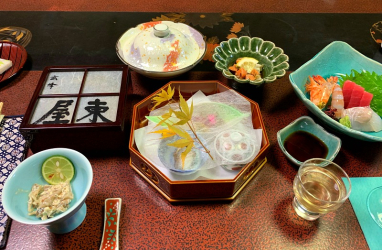
Meals: The Japanese diet is quite different from ours. Most meals, including traditional Japanese breakfasts, consist of rice, miso soup, tofu, fish, and an amazing array of small dishes of pickled vegetables, and vegetables in broth. Sashimi, raw fish, or sushi may be served as well as other meat dishes. Western-style breakfasts may be available at some of our accommodations. Delicious Japanese food is definitely a highlight of this tour. Brush up on your chopstick skills! Some meals will be in tatami mat rooms with low tables, again traditional in Japan.
Diets and Dietary Restrictions: Japanese meals are generally very plentiful and offer a variety of dishes and ingredients. In most cases, dietary preferences can be accommodated by simply avoiding certain items, while still enjoying a substantial meal.
While we will do our best to accommodate vegetarian diets, it should be noted that aside from pickled vegetables, which are typically served in small quantities, vegetables are not one of the main components of a Japanese diet and the concept of vegetarianism is not well understood. With advanced notice fish or meat dishes can be replaced by other alternatives such as eggs and tofu. It should also be noted that dachi stock which is typically fish and/or meat based is widely used in Japanese cooking and may be difficult to avoid entirely.
Gluten is present in numerous components of Japanese cuisine, most notably in staples such as soy sauce and miso. While it is feasible to avoid dishes that clearly contain gluten, including bread and noodles, providing meals that are entirely gluten-free is extremely challenging. This is due to the widespread use of foundational ingredients that inherently contain gluten and form the base of many traditional Japanese dishes.
Additionally, meals in Japan can be prepared in small, efficient kitchens and preventing cross-contamination is not always possible.
If you have any food allergies, please let us know at the time of booking so that we can address any issues early on.
TRAVEL
Osaka’s Kansai International Airport is most convenient to the start and end of the trip. It is also possible to fly in and out of Tokyo, you need only allow for additional train travel time.
MEETING POINT
The group will meet at about 6:00 pm on Day 1 at our hotel in central Osaka.
ENDING POINT
The trip will end after breakfast at our hotel in Kyoto on the last day of the trip, Day 14. Rail transfer to Kansai International Airport from Kyoto is easy and direct, taking about 70 minutes. Access is more or less directly from the train platform into the airport.
ABOUT THIS TRIP
We are happy to be working in collaboration with Bob Hefill, a professional freelance translator and founder of Hike Japan. Bob has been organizing and running trips in Japan since 2003 and is eager to infuse our trip with his knowledge of and enthusiasm for Japan and its culture. For those interested in joining us on this trip, don’t forget to bring along your flexibility, good humor, and love of adventure and discovery!
WHO WOULD LIKE THIS TRIP
This trip is as much a cultural experience as it is a hiking and walking trip. It would be a fabulous experience for any fit, active traveler, but especially for those who have hiked or walked in other parts of the world but have yet to travel to Japan. While the hiking routes may not feel as extensive or remote, nor the landscapes as expansive as those in the Rockies or European Alps, the cultural aspect adds an intriguing and captivating dimension. Very basic things, like eating and sleeping, can be quite different in Japan. Breakfast might look very much like dinner, and getting up and down off a futon on a tatami mat floor can be an interesting new exercise. The Japanese are generally extremely polite and respectful. Certain social etiquettes require more mindful attention than others, such as bathing at hot springs, and less inhibition. An openness and willingness to try new things is an essential and rewarding part of this journey.
WHAT MAKES THIS TRIP DIFFERENT
Many things! The tour is designed to provide some great hiking experiences as well as insights into Japanese history and culture. The itinerary highlights some of the most interesting and rewarding sections of the Kumano imperial pilgrimage routes, with visits to many of the most important sacred sites in the Kii Peninsula. The other destinations we’ll visit – Yoshino, Asuka, Nara, and Kyoto, are all significant in gaining a good understanding of pilgrimage routes in this part of Japan and how Japanese culture developed in the Yamato area around Asuka, Nara, and Kyoto. We’ll gain insights into Japanese culture other visitors rarely have. Highly experienced guides, carefully chosen lodgings, some with onsen – wonderful natural hot spring baths, and delicious Japanese food, all contribute to making this tour truly special.
MORE INFORMATION
Please contact us for a more detailed itinerary, for more information, or to register.
Related Trips
 Colors of Provence Hike
 Dordogne on Foot – France Walking Tour
 James Herriot Way
Walk the Landscapes of All Creatures Great and Small - Yorkshire Dales Inn-to-Inn
James Herriot Way
Walk the Landscapes of All Creatures Great and Small - Yorkshire Dales Inn-to-Innmore
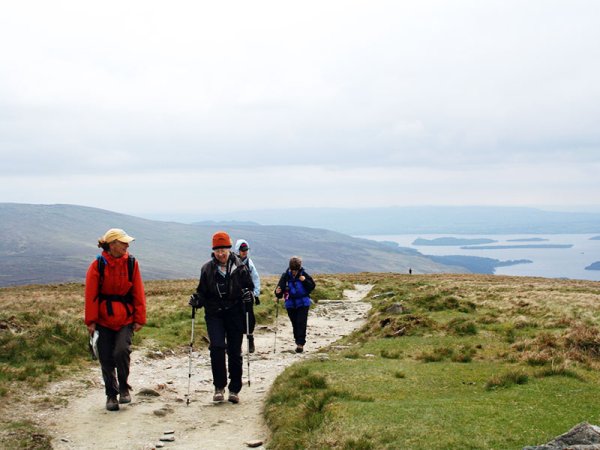 Scotland’s West Highland Way Hike
Scotland's classic long-distance route from Glasgow to Ben Nevis
Scotland’s West Highland Way Hike
Scotland's classic long-distance route from Glasgow to Ben Nevismore


