Reserve Your Spot
 (888) 845-5781
 Destinations
 Taking A Trip
 About Us


 Home
 Reserve a Guided Trip
 Reserve a Self-Guided Trip
 Destinations
 Taking a Trip
- Trips Overview
- Trips Preparation
- Trips Overview
 About Us
 Contact Us
 Blog
 (888) 845-5781
8 French Foods to Try While Hiking the Alps to Provence
History and Culture | 5 months ago
From Alpine raclette to black truffles and Corsican chestnuts, discover 8 dishes worth knowing before you hike through France with FieldHouse Adventures.
From the fine dining of Paris to the provincial fare of a grandmother’s kitchen, eating in France is a serious affair. France shares borders with Germany, Austria, Italy, and Spain, and its long, generative culinary history carries the marks of all of them. Nowhere is that more apparent than on foot, moving slowly enough between regions to actually taste the difference. Consider this a food guide to what to eat in France, region by region, before your fork ever hits the plate. Because in France, food is philosophy.
1. Raclette (Haute-Savoie, the Alps)
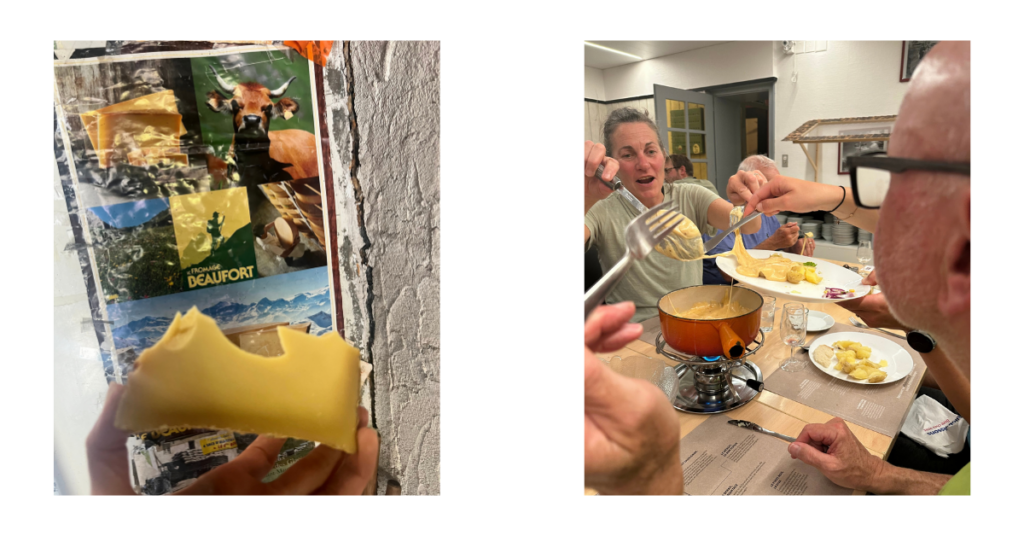
Raclette actually started across the border in Switzerland’s Valais region, where medieval shepherds are recorded melting cheese over an open fire as early as the 12th century, scraping off the softened portion to eat with potatoes. The name comes directly from racler, French for “to scrape.” It wasn’t until the 20th century that the dish crossed into French Savoie, where it’s since become something more akin to a ritual than just a meal: melted cow’s milk cheese scraped over boiled potatoes, cornichons, and cured meats, usually shared at a table that’s in no hurry to clear. It defines leisurely meals; indulging in the decadence of warm cheese is quintessentially French. Today, most households own a raclette oven or grill, allowing raclette to become far easier to make and thus more ubiquitous in French cuisine, often brought out at holidays when the air is chilly and people gather to celebrate. We recommend warm cheese in any form, but if you find yourself able to enjoy it traditionally, with a full wheel and an open flame, take it.
2. Beaufort Cheese (Haute-Savoie, the Alps)
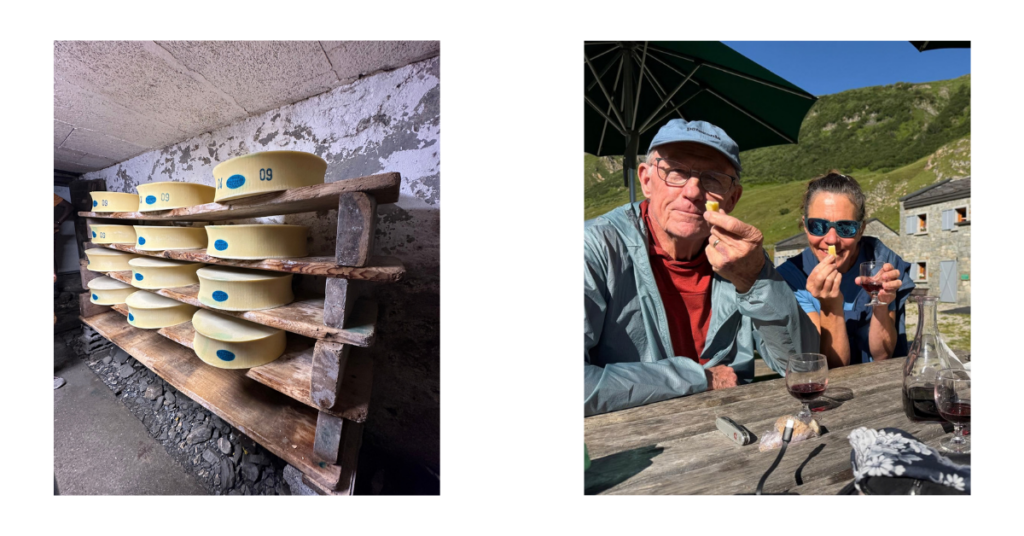
While Raclette might be the showstopper when it comes to preparation, Beaufort has gained its own renowned reputation without the extra theatrics. A raw-milk cheese in the pâte pressée cuite family, meaning “cooked pressed cheese,” Beaufort shares many similarities with Gruyère and Comté, and they all play a part in the long and well-established history of alpine cheesemaking that dates back to Roman times. Beaufort has carried AOC status since 1968, a French certification (Appellation d’Origine Contrôlée) that ties a product’s name to very specific methods of production, ingredients, and geography, as a way of regulating food and wine labels, rather than allowing them to be used purely for marketing. For Beaufort, that means the milk used must come only from Tarine or Abondance cows, each producing no more than 1,282 gallons of milk a year. For context, that’s less than half of the modern dairy cow’s output, allowing for richer, more concentrated flavor: quality over quantity. The cows are only allowed to graze in a defined stretch of the Beaufortain, Maurienne, Tarentaise, and part of the Val d’Arly valleys, which sit at high elevation and are rich in wildflowers, herbs, and a variety of grasses, leading to more complex profiles in the final cheese. Beaufort is firm and supple, with a distinct floral sweetness and nutty flavor, like hazelnut and walnut, that deepens as the wheel of cheese ages. The rarest version, Beaufort d’Alpage, comes from a single herd milked twice daily at high-mountain chalets over just 100 summer days, which is part of why it’s harder to find than the standard wheel. This cheese stands on its own as a testament to the pride and intention that is placed in France’s culinary wonders.
3. Altesse and Jacquère (Savoie Wines)
When we think of wine in France, our minds often stray to Burgundy and Bordeaux first: the land of rich chardonnay, delicate pinot noir, and snappy sauvignon blancs. These are delightful and should be explored zestily, but there is so much more to France’s intricate and often wildly complex wine map. Enter Alpine wines, particularly Altesse and Jacquère, which rarely get much attention outside the region that makes them. Both grow on steep, southwest-facing slopes shaped by the same glacial and geological forces that built the mountains around them, with limestone scree, marl, and schist soils that drain fast and reflect the sun’s heat back onto vines that would otherwise struggle to ripen at that high an altitude. Sipping on Jacquère is like drinking cool mountain water. It’s delightfully fresh and light-bodied, with notes of green apple, citrus, and white peach alongside a distinctly stony, mineral backbone that pairs perfectly with some of France’s richer delicacies. Altesse provides a little more food for thought. Fuller-bodied with more texture, with notes of alpine flowers, ripe pear, honey, and toasted hazelnut, particularly as it ages. Pair this with a slice of Beaufort cheese and watch the similarities sing. Look out for producers like Gilles Berlioz and Domaine du Gringet, or ask around the area; in France, it’s hard to throw a rock without hitting a winemaker.
4. Duck Confit (Dordogne)
Dordogne food runs toward decadence, and poultry sits at the center of most of it. Confit takes its name from the French confire, meaning “to preserve,” and the technique arose as a way of preserving meat long before modern refrigeration emerged. Duck legs are salt-cured, then slowly cooked for hours in their own rendered fat at a low temperature until tender, before being stored fully submerged in that same fat. Sealed off from air, the meat could keep in a cool cellar for months, which made it a practical way to get a household through winter in a region long before electricity reached rural farms. What we think of today as the definition of indulgence, a luxury and a delicacy in any context, was actually a necessity for centuries. In Dordogne, confit is a must-try, and when you taste it, think back on the remarkable ingenuity of civilizations over the centuries. Pair the rich offering with one of the crisp wines mentioned above for a delightful harmony of tastes.
5. Black Truffle (Dordogne)
Beneath the oak and hazelnut trees of Dordogne, specially trained dogs still root out Tuber melanosporum, the black truffle that’s made this region’s name synonymous with the ingredient. The fungus grows in a symbiotic relationship with tree roots, entirely underground and invisible from the surface, which is why hunters have always relied on an animal’s nose rather than their own eyes. Sows were the original truffle hunters, drawn by a scent that mimics a male pig’s pheromone, though dogs have mostly replaced them since a dog, unlike a hungry sow, doesn’t try to eat the find on the spot. Truffle hunting here is seasonal, running roughly December through February, weather-dependent, and genuinely difficult, which is part of why these truffles carry such a reputation amongst gourmands and the culinarily curious. Truffles have a deep, earthy smell, like wet earth after a heavy rain, with a deep umami quality that’s layered under notes of cocoa and roasted nuts. Truffles are deeply delicious, but their aroma is often more complex and delightful than their taste alone, a big reason why they are often shaved onto dishes like pasta, their richness acting as an enhancing element rather than the primary ingredient. While truffles are becoming increasingly available in the U.S., trying them in a place defined by their presence is a unique experience.
6. Bouillabaisse (Provence)
So many of our modern-day delicacies are rooted in histories of necessity and ingenuity. Bouillabaisse, like confit, is a delicious example of how another generation’s ingenuity has become our delicacy. Provence sits in the southeastern corner of France, running along the Mediterranean coast, roughly from the Rhône River in the west over to the Italian border in the east, with the Alps rising up along its northern and eastern edges. Marseille, a major city and a somewhat unofficial capital, along with the entire region, has strong Mediterranean influences that run deep both geographically and historically. Centuries as a port region have influenced the cuisine here, and bouillabaisse has grown from a local specialty into a dish recognized well beyond Provence. A rich, briny, fish-forward broth with notes of tomato, anise, and cayenne pepper, built on rockfish, the traditional core of the dish, though modern versions often add lobster or crab, shrimp, scallops, mussels, and clams as well. Marseille’s fishermen originally made the broth from the portions of their catch they couldn’t easily sell at market, simmering it with fennel and herbs to bring bright elegance to the briny stew. Saffron and dried orange peel were added later to bring depth and flavor as the soup became more popular and started to appeal to a wider audience than its original fisher folk. It’s since become one of Provence’s signature dishes, a callback to making do with what you have, and a delicious one at that.
7. Châteauneuf-du-Pape
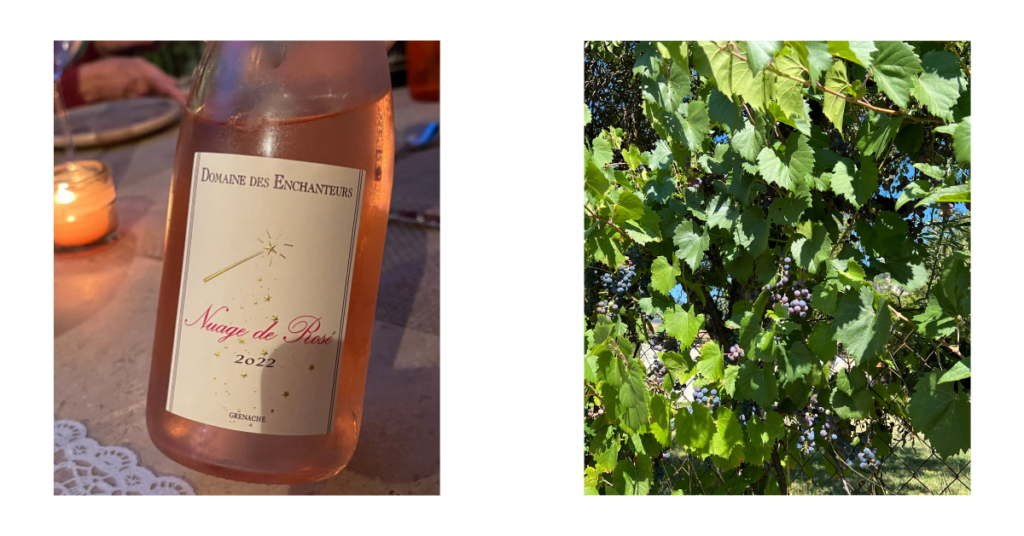
Provence rosé needs little introduction (light, crisp, and wonderfully quaffable), but just over the border sits a wine region that tends to be slightly more serious. Châteauneuf-du-Pape takes its name and its history from the Avignon papacy: the name translates to “the Pope’s New Castle,” which alludes to the Avignon papacy (1309–1377), when the seat of the Catholic Church relocated from Rome to Avignon. Pope John XXII built a summer residence on the site and actively promoted the cultivation of wine grapes in the area, and the surrounding vineyards became known as the “pope’s wine.” Growing 13 permissible varieties (most notably Grenache, Syrah, Mourvèdre, and Cinsault), Châteauneuf-du-Pape is defined by powerful, richly spiced red wines with ripe red fruit, wild herbs, black pepper, and spice. Châteauneuf-du-Pape wines hold up well against duck confit’s richness, truffle’s umami intensity, and, if we’re looking to indulge, a well-aged Beaufort, whose strong nutty character can stand up to a big spicy red. For Provence’s fresh seafood and the Alps’ raclette, though, stick with the Alpine whites, or try a white from the Châteauneuf-du-Pape area, which tends to have notes of apricot and honey.
8. Corsica: Chestnuts, Charcuterie, and Distinct Culinary Tradition
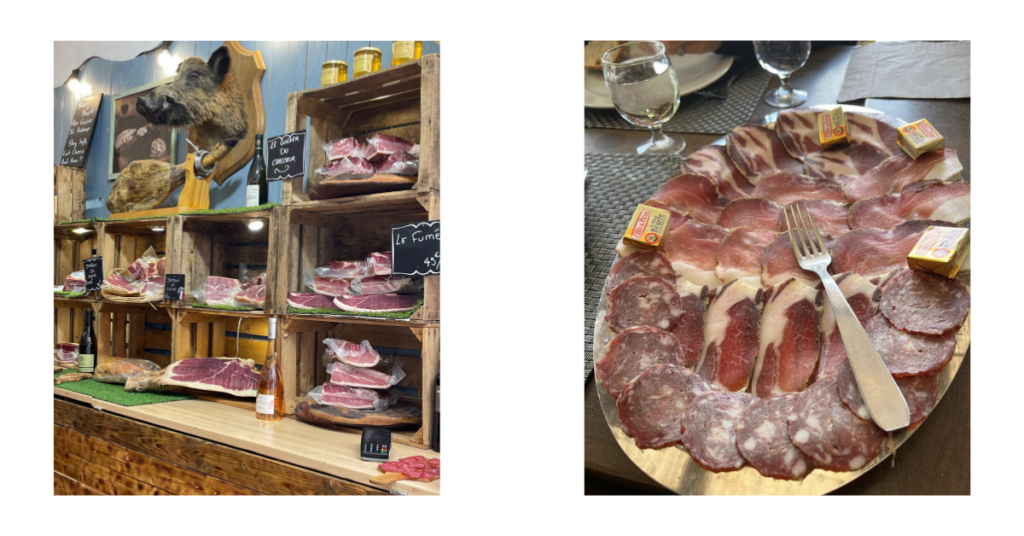
Corsica, while a French region, has its own distinct culinary tradition that is worth exploring. For nearly four centuries, Corsica belonged to the Republic of Genoa, an Italian city-state, and it only became French in 1768, when Genoa sold the island to France to settle its debts, a transfer formalized in the Treaty of Versailles just a year before Napoleon Bonaparte was born in Ajaccio. Corsica sits far closer to Italy geographically, roughly 90 kilometers off the Italian coast, than it does to the French mainland, and its food, language, and culture still carry a distinct Genoese and Tuscan imprint that has melded with four centuries of French rule. Much of the island’s cuisine traces back to the chestnut trees the Genoese systematically planted across the interior starting in the 16th century, a crop that required little maintenance once established and produced a reliable, storable calorie source for an island community. Today that legacy shows up in dishes like pulenta (the original version of Italian polenta), made from chestnut flour, alongside brocciu, a whey cheese similar to ricotta, and figatellu, a dry, smoked pork liver sausage traditionally shaped in a U and best eaten soon after it’s made. Wild boar, simmered into a hearty stew called civet de sanglier, is often considered the island’s signature dish, while homemade aperitifs infused with myrtle (an evergreen shrub with fragrant leaves similar to eucalyptus or rosemary) offer a glimpse into an island heritage forged by many cultures.