 Reserve Your Spot
 (888) 845-5781
  Destinations
 Taking A Trip
 About Us

 Home
Home Reserve a Guided Trip
 Reserve a Self-Guided Trip
 Destinations
 Taking a Trip
- Trips Overview
- Trips Preparation
- Trips Overview
 About Us
 Contact Us
 Blog
Blog (888) 845-5781
How to Choose Hiking Boots for Your Next Hiking Trip
Uncategorized | 6 months ago
Long days on the trail can take their toll, and our feet bear the brunt of the exertion. Comfortable, well-fitted hiking boots will save you from unpleasant aches, possible injury on the trail, or debilitating blisters. This is easily one of the most important decisions when you’re preparing for a long trip.
We spoke with our longtime guides—who collectively have decades of experience leading treks across Europe, Japan, and beyond—to get the inside scoop on what matters most. Here are 8 things to consider when choosing the right hiking boots, with real-world insight from the people who live on the trail.
8 Things to Consider when Buying Hiking Boots
#1 Fit
Your boots should be snug so that your heel doesn’t lift, but your toes need space, especially when you’re going downhill. Aim for a finger’s width of space at the toe box, and be sure to try them on with thick hiking socks. If possible, give them a test drive on an incline instead of flat floors.
Our Norway guide, Sarah, swears by her Lowa Renegades for the fit they provide across different terrain:
“I love my Lowa Renegades. The high ankle style is great for deep puddles, rocky trails, and protection from low bushes and trees. And these boots are so comfy I can train in my “old” pair that aren’t so waterproof anymore and pack my “new” pair to travel and not worry for a moment about hot spots.” — Sarah, Norway Guide
Guide Jay had a similar conversion story. Decades ago, she was hiking in sneakers when she was talked into buying her first pair of Lowas in Chamonix—right before guiding the Tour du Mont Blanc. She wore them brand new, unbroken in (not generally recommended!), and never got a single hot spot. She’s been loyal ever since.
That said, every foot is different, and so is every brand’s fit. One of our founders, Andrea Mulla, who has hiked the TMB over 60 times, has actually moved away from the Lowa Renegade because the fit changed over time: “The last pair I tried were boxy and uncomfortable.” She switched to On Cloudrock and La Sportiva TX Hike, which she found better suited to her feet. The lesson? Don’t just go by a brand name—try things on and trust how they feel on your feet.
#2 Support and Stability
This is especially important when hiking on rugged terrain for longer periods or on a multi-day trip. A boot should have ankle support to keep you stable when hopping from rock to rock or heading downhill on unstable ground. Look for good arch support to improve balance and a stiffer midsole to help on rocky terrain. More support keeps you safe in difficult areas, but it does mean more weight, so it’s important to balance your needs with the right boot.
Our Dolomites guide Chiara found a great middle ground with the La Sportiva TX4 Mid Gore-Tex:
“They’re mid-cut shoes, so your ankle is protected but not completely plastered, and they’re made of super-soft leather. They are incredibly comfortable—it’s like wearing slippers.” — Chiara, Dolomites Guide
On the other end of the spectrum, guide Louise prefers barefoot-style boots. She wears the XERO Scrambler Mid for the wide toe box and natural foot movement, but notes they still deliver reliable support and a high rand for protection. As she puts it: “They are the only pair of boots that I do not want to take off at the end of the day.”
And for those dealing with foot or ankle issues, there are still great options. Guide Jude had to set aside her beloved boots due to an Achilles problem and switched to the Oboz Sawtooth walking shoe—something she’d always been against. Now she wouldn’t be without them.
#3 Traction
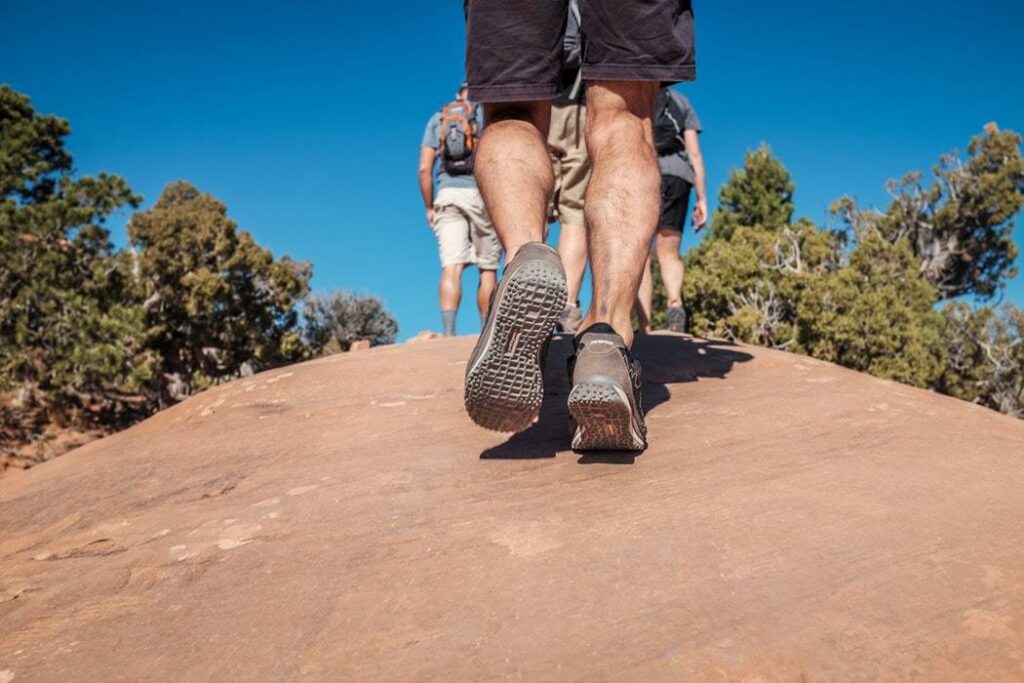
While the trail will likely change as you go and depend on the weather, there are a few things to consider in terms of traction. If you’re hiking on muddy, steep, rocky, or loose terrain, a deeper, more aggressive lug will give you better grip. This provides a lot more safety on the trail and helps avoid injuries like a sprained ankle. A shallower tread will provide lighter traction, which is better for well-maintained trails and packed dirt roads where heavy hiking boots might feel clunky.
On a multi-day trek with diverse terrain, err on the side of caution and go for grip. Jude put her Oboz Sawtooth walking shoes to the test across three countries:
“Excellent grip—tested for two summers on the slabby, wet, lichen-covered rocks of Norwegian mountains. Keeps the water out for the numerous puddles in boggy Wales and is solid enough to tackle the stony paths and rocky outcrops in Austria. An all-rounder!” — Jude, UK & Norway Guide
#4 Waterproof vs. breathability
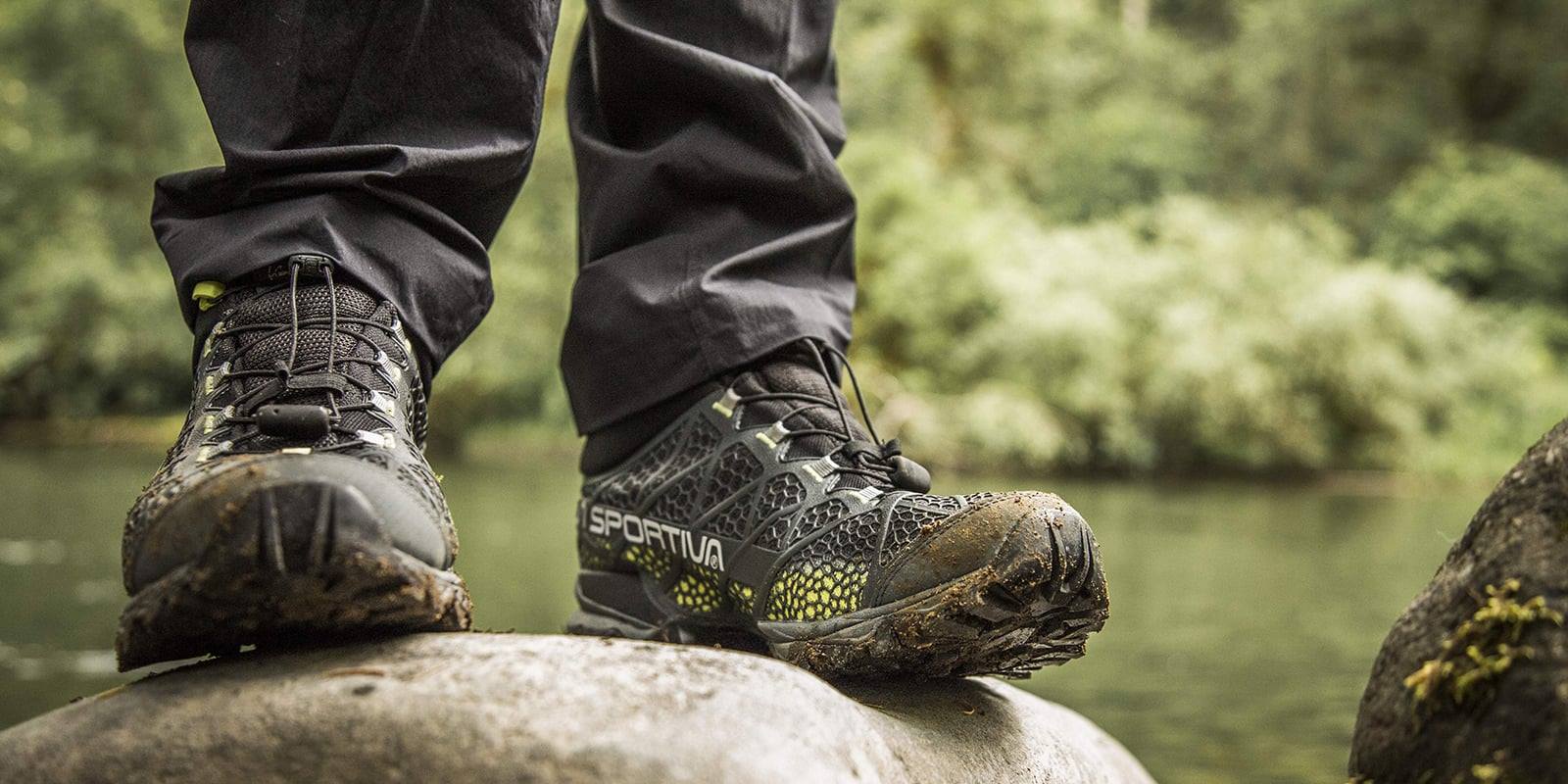
When making this decision, it’s important to think about where you’re hiking. Waterproof boots use materials like Gore-Tex and keep feet dry in heavy rain and occasional stream crossings. They can be less breathable and heavier, but will keep your feet dry in inclement weather and muddy trails. Non-waterproof or breathable hiking shoes are better for hot climates with very dry trails, or trips where you expect to get wet (and are okay with it), since they generally dry a lot faster.
Several of our guides solve this by owning two pairs. Icelandic guide Þórdís keeps Scarpa leather boots for rainy and winter conditions, because the real leather keeps her feet dry, and lighter shoes for dry weather. Bob, who guides in the Japan Alps, uses heavy-duty Scarpa SL Activ boots for all-season mountain hiking but switches to lighter Merrell Moab 3 Gore-Tex shoes for the maintained trails of early summer and autumn.
The takeaway: if you’re only bringing one pair on a trip, waterproof is usually the safer bet. But if your trip involves varied weather or terrain, having a lighter backup pair can be a game-changer.
#5 Weight
Lightweight boots cause less fatigue, can be more comfortable, and generally dry faster—but they aren’t always suited to rough or steep terrain. Heavier boots offer more protection and durability, helping you avoid injury along the way.
Founder Julie Head swaps out her boots depending on the trek, so the weight works in her favor. For longer trips carrying a 20 lb pack, she chooses something like the Lowa Renegade Evo GTX Mid, which has a thicker sole for long days of rugged terrain. If she’s not carrying much weight, she prefers the Salomon X Ultra 360 Edge Gore-Tex, which have great traction but are lighter, making them perfect for day trips and shorter distances.
Andrea takes a similar approach: she uses On Cloudrock Low shoes for treks like the Tour du Mont Blanc and Dolomites, where the trails are well-maintained, but reaches for something sturdier for more demanding routes like the Haute Route. “They are stiff enough but not too stiff,” she says of her On shoes—a solid option when you want to move fast and light without sacrificing too much grip.
#6 Materials & durability
When considering boots, it’s important to take into account the materials they’re made of. Leather is very durable and naturally water-resistant, but boots take longer to break in, which can cause some uncomfortable rubbing at first. Synthetic materials are lighter, more breathable, and quicker to form to your foot.
Among our guides, leather is a strong favorite. Jay specifically chooses leather boots because they “breathe and mold better to my foot than a synthetic fabric.” Chiara’s La Sportivas are made of super-soft leather, and Bob’s go-to four-season Scarpa SL Activ is a leather trekking boot he describes as one he actually looks forward to putting on. For boots you’ll keep for years, leather tends to reward the patience of the break-in period.
#7 Break-in period
Even great boots need some adjustment. Allow at least 2–4 weeks of light wear before a big hike. Nothing is worse than a blister on the first day of a long trek. Make sure your feet are comfortable before setting out in the wild.
Jay’s story is the rare exception that proves the rule—she wore a brand new pair of Lowas straight out of the box for a 10-day Tour du Mont Blanc and came out unscathed. But even she wouldn’t recommend that approach. The safer bet is to wear your boots around town, on short walks, and on a few training hikes before your trip. Sarah does exactly this: she trains in her older pair and saves the newer pair for travel, knowing both are already broken in and comfortable.
#8 Foot Shape
Not all feet are the same—in fact, it’s pretty common for your right foot to be different from your left. Things to consider when matching a boot to your feet:
Wide vs. narrow toe box: Your toes need room in hiking boots, particularly when going downhill. Jay has a narrow heel but wide toes, and that specific combination is a big reason the Lowa Renegade works so well for her. Louise needs a wide toe box for her barefoot-style preference, which led her to the XERO Scrambler.
High vs. flat arches: If you need to use inserts, be sure they fit comfortably in your boots.
Sensitive pressure points: Make sure you try on both boots to be sure each foot feels comfortable and secure.
Our guide Wenche found her brand—Crispi—when she was 20 and has never looked back. That kind of loyalty usually means the boot matches the foot. When you find the right fit, you’ll know.
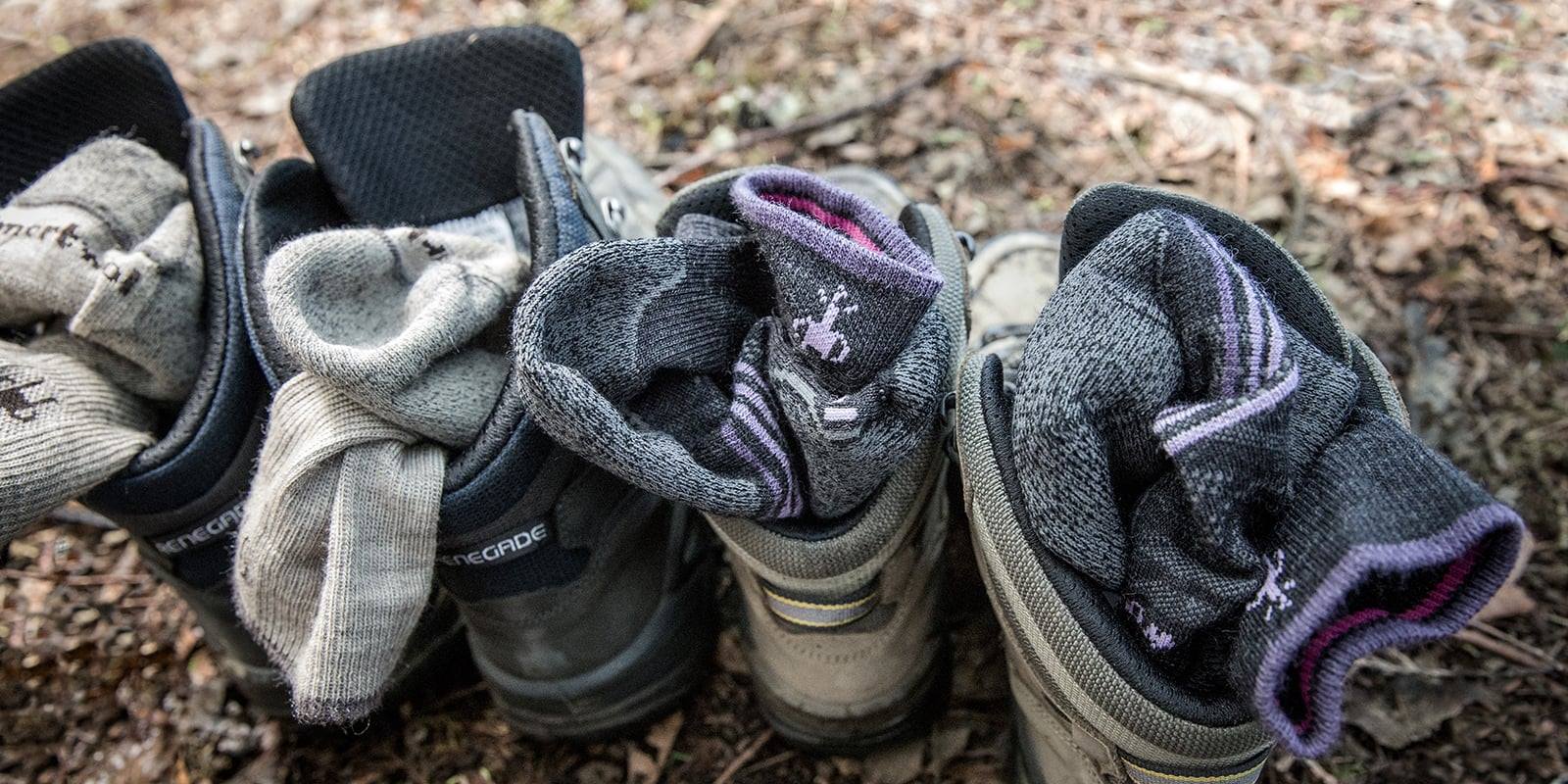
Find your perfect pair!
If there’s one thing our guides agree on, it’s that there’s no single “best” hiking boot—there’s the best boot for you. Across our team, you’ll find loyal fans of Lowa, Scarpa, La Sportiva, On, XERO, Oboz, Merrell, and Crispi. What they all have in common is that they took the time to find what works for their feet, their terrain, and their hiking style.
As our Japan guide Bob said, “Look after them. They will love you for it.”
Packing for a long hiking trip can seem daunting, but it’s all about comfort and craftsmanship. Choosing the right pair of boots now means they’ll be with you on the trail for many miles to come.
If you’re looking for some guidance, we’re happy to answer any questions about packing lists and gear. Just give us a call or visit our website!


