 Reserve Your Spot
 (888) 845-5781
  Destinations
 Taking A Trip
 About Us

 Home
Home Reserve a Guided Trip
 Reserve a Self-Guided Trip
 Destinations
 Taking a Trip
- Trips Overview
- Trips Preparation
- Trips Overview
 About Us
 Contact Us
 Blog
Blog (888) 845-5781
Alpine Wildflowers on the Tour du Mont Blanc
Uncategorized | 6 days ago
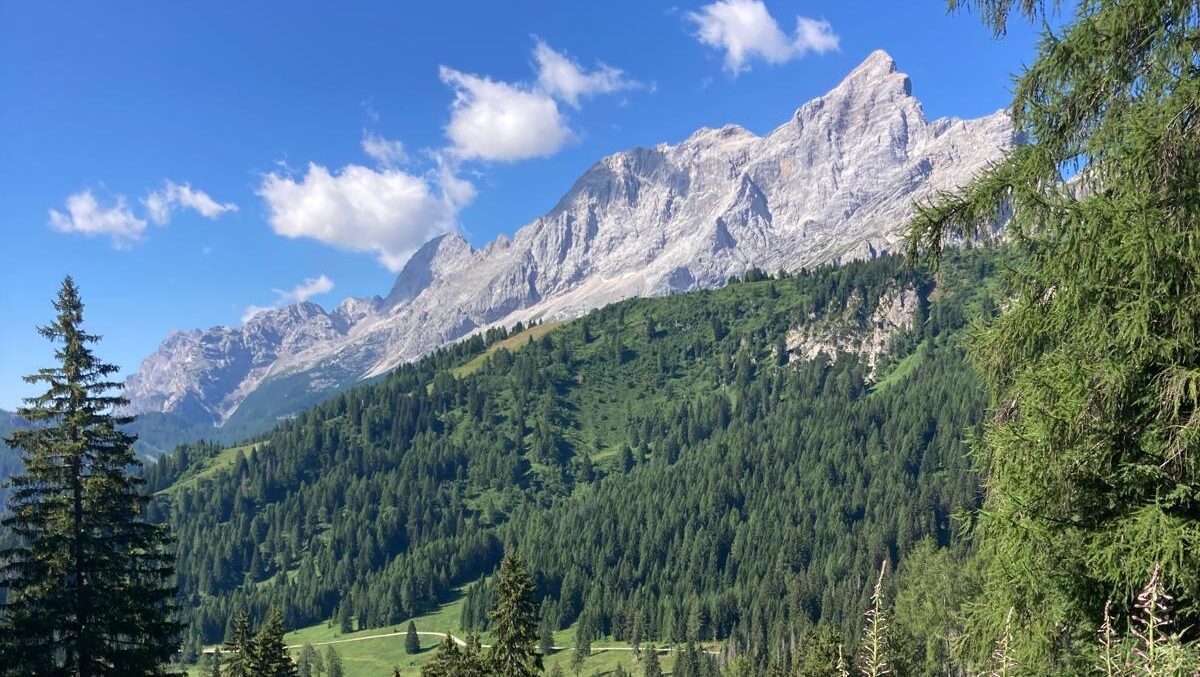
Slow down on the Tour du Mont Blanc with a guide to alpine wildflowers, from edelweiss and gentians to the color-filled meadows of summer
The Tour du Mont Blanc, with its soaring jagged peaks, has for centuries served as a beacon, a challenge looming in the distance for the adventurous. The alps command attention, rightly so, and if you’ve ever found yourself wandering through these alpine landscape you know that a lot of time is spent looking up. But there’s wonder all around, and the Alps in summer are bursting with it: stop and smell the wildflowers!
In July, the snow has melted from high meadows, creating rivulets of cold, clear water running down familiar paths in the rockface. The sun rises slowly, turning summits a bright golden hue before stretching luxuriously down to the valleys and ravines, where everything that has been dormant over the long cold winter is ready to bloom. It at times seems everything comes alive at once. Alpine meadows burst into color. Surprising shades of blue and purple that can take your breath away.
Here’s our thumbnail guide to the alpine wildflowers of Tour du Mont Blanc, but of course, to get the full portrait, you’ll have to go see for yourself.
Edelweiss
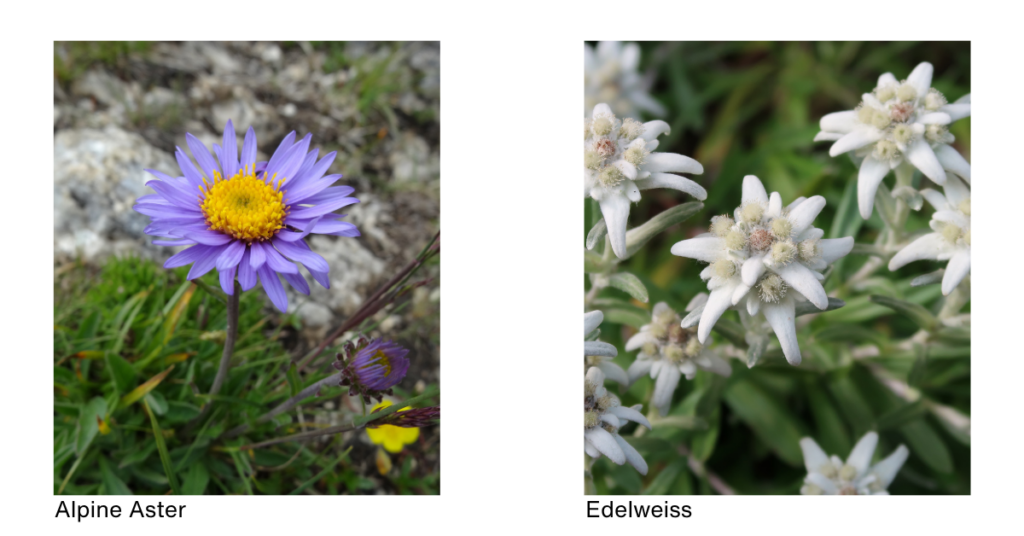
Edelweiss is perhaps the most ubiquitous mountain plant, featured on postcards and hotel signage, and of course Rodgers and Hammerstein’s 1965 Sound of Music. But before we cast them off as cliché, spotting them is difficult so to see them in person is thrilling. Tucked neatly into rocky crevices,their small, silvery, star-shaped faces are whimsical and felted. They have adapted over the centuries to the intense cold and UV radiation of high-altitude landscapes, and they have become a symbol of rugged beauty, purity, and love as they persevere in adversity.
Alpine Asters
Nearby, Alpine asters, with their golden centers and blue-violet ray-like petals, grow close to the ground, turning from the wind and cold, thrusting their daisy-like faces to the sun. They dot steep hillsides, flashes of purple against soft mountain grasses. While a passing marmot might nibble on their delicate petals, they serve as a vital source of nectar for mountain butterflies and bees for the short growing season.
Trumpet Gentians
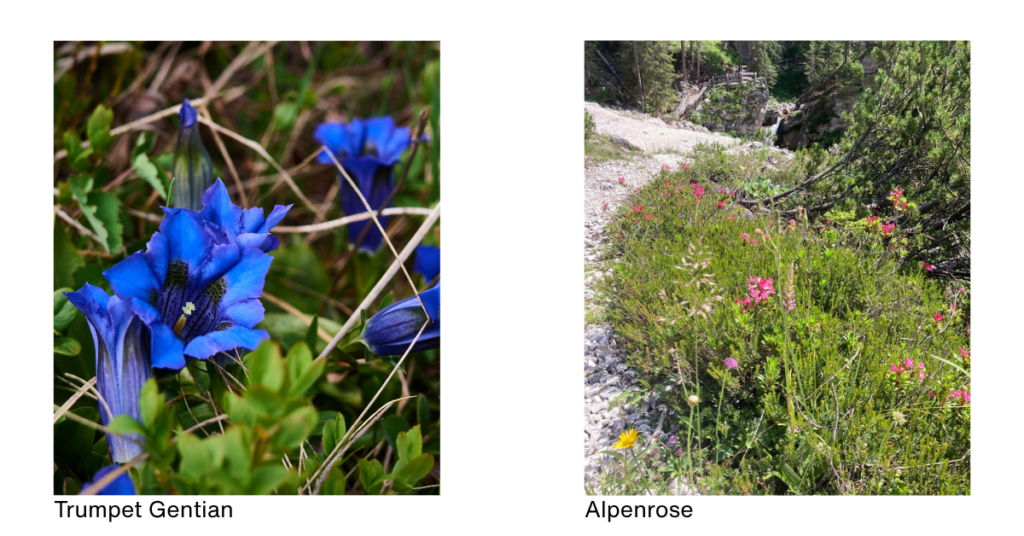
Trumpet gentians, their deep, ultraviolet bell-shaped bloom, speckled with white, grow low and often in small clusters. Their color shifts from purple to electric blue as the light changes. Their stunning beauty is not purely aesthetic. Much like the asters, they attract native pollinators. And their low-lying, spreading rosette structure creates groundcover that can prevent soil erosion on the steep slopes of the Alps and retain moisture in a dry and windy environment. If there’s one flower that gets photographed more than any other on this trail, it’s the trumpet gentian — a blue so saturated it looks slightly unnatural against the grey scree and green turf. They grow low, often in small clusters, and their color seems to shift depending on the light: nearly purple in shadow, almost electric blue in direct sun.
Alpenrose and Wild Thyme
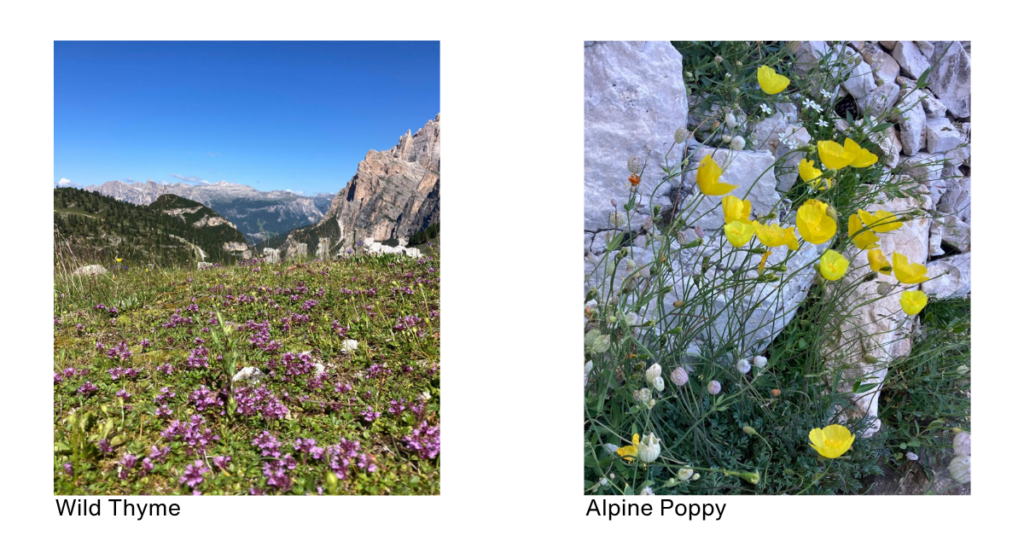
Alpenrose grows in dense, low shrubs right along the trail edge, its leathery dark-green leaves studded with clusters of magenta-pink, bell-shaped flowers. It thrives on acidic soil pockets tucked between rocks, often right where a trail cuts past a rocky gully or waterfall, spilling down toward a stream below the path. Similarly, wild thyme carpets the ground, a low mat of tiny purple flowers. They bring a herby scent to the air and are your first sign you’ve climbed above the treeline.
Alpine Poppy and Arnica
It’s remarkable to see what can not only survive, but thrive in difficult environments.The alpine poppy is a bright and beautiful reminder of this, growing straight up out of loose rocky rubble, its papery yellow petals almost translucent in the sun.
Later in the season, you’ll start seeing arnica, which grows in tall clusters, its bright yellow flowers standing out against the greys and greens of the rocky landscape. Arnica has long been a staple in homeopathic medicine, and the oil in its bright petals aid with sore muscles, inflammation, and minor swelling. Perhaps fitting for a hiking trip that can be strenuous and leave you with a few aches after a long day.
In this landscape of intensities, the growing season is incredibly short. Most alpine plants have only six to ten weeks between snowmelt and the first frost of autumn to complete their entire above-ground life cycle. To germinate, grow, flower, and set seed in such a short period of time is a remarkable feat, and it leads to this incredible moment in time, a fireworks show of color and texture that’s as short-lived as it is intense. It serves as a small reminder of something we talk about often: the value of moving slowly through these shifting landscapes, taking the time to notice these small, beautiful things. When traveling, we hope to gain a connection to the landscapes we explore, to run our fingertips through tall grasses, breathe the mountain air, and to come to know a place as we know ourselves. To stop and smell the edelweiss.


